Teething Without the Panic: Symptoms, Safe Relief, and Real Red Flags
What teething actually causes (and what it doesn't), pediatrician-safe ways to soothe a teething baby, and the red flags that mean it's time to call.
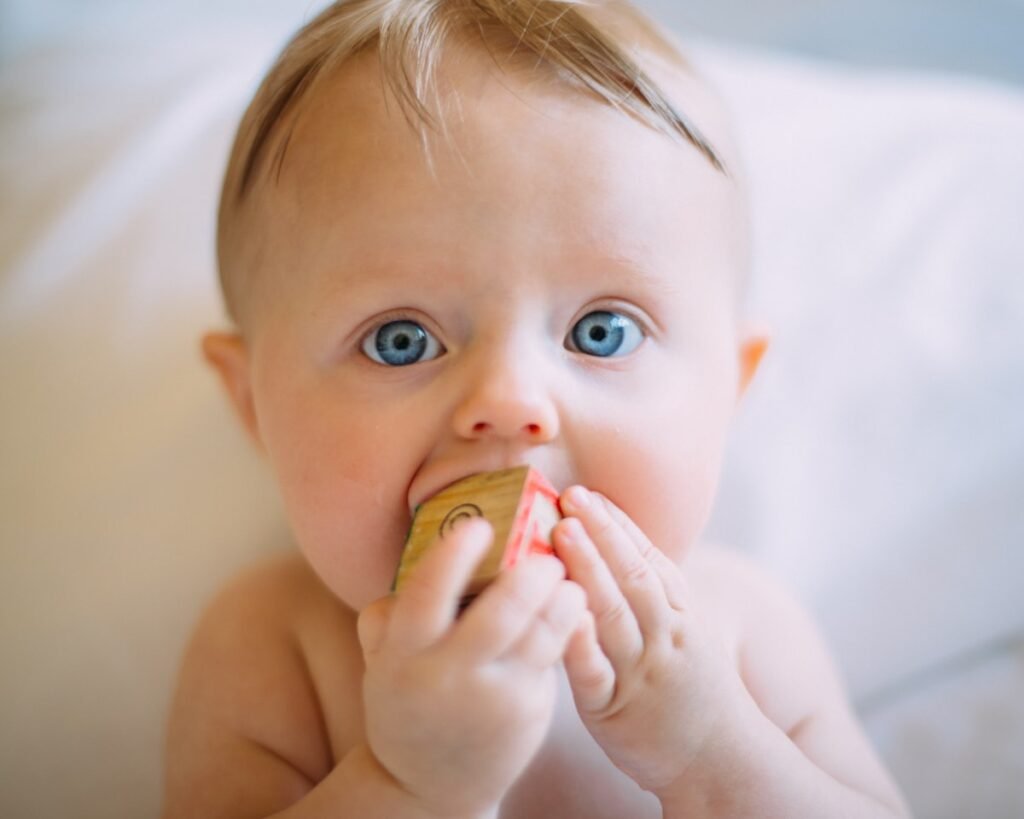
The quick version
- Teething is uncomfortable but mild — it does not cause high fever, diarrhea, or a bad cough.
- The safest relief is the simplest: cold, counter-pressure, and a calm, present you.
- Skip amber teething necklaces and benzocaine gels — both carry real safety risks.
- If your baby has a fever over 100.4°F, seems truly sick, or you're worried, treat it as illness, not teeth — and call your pediatrician.
The 2 a.m. question: is it teething?
Your baby is fussy, drooling through three bibs, and gnawing on everything in reach. Somewhere around four to seven months, most parents start asking the same thing: is this teething? Usually, yes — and usually, it's far less dramatic than the internet makes it sound.
This guide is the calm, practical overview: what teething really does and doesn't cause, how to safely soothe a teething baby, and the genuine red flags that mean it's time to stop blaming teeth and call your pediatrician. (Want to know which tooth is coming and when? See the companion stage map linked below.)
What teething does — and doesn't — cause
Teething symptoms are real but modest. The most reliable signs are local: it's happening in and around the mouth. When symptoms spread into the rest of the body, teeth are usually not the culprit.
Likely teething
- More drooling than usual
- Gnawing, chewing, biting on hands and toys
- Mild gum swelling or a visible bump
- Fussiness and being clingy
- Slightly disrupted naps and night sleep
- A low-grade temp under 100.4°F (38°C)
Probably NOT just teething
- Fever of 100.4°F (38°C) or higher
- Diarrhea or lots of vomiting
- A runny nose, cough, or congestion
- A rash anywhere but the chin/drool zone
- Refusing all feeds for an extended stretch
- Seeming genuinely sick or lethargic
A quick reframe
Teething and the first colds often arrive in the same window, because the protective antibodies babies get from birth start fading around 6 months — right as teeth appear. So a sick baby may also be teething, but the illness needs its own attention. Many parents find it helps to ask: are the symptoms only in the mouth, or all over?
None of this is medical advice — every baby is different. But the mouth-versus-whole-body question is a useful first filter before you decide whether you're dealing with teeth or something else.
Safe ways to soothe a teething baby
The good news: the most effective relief is also the safest and cheapest. Teething is about pressure and inflammation in the gums, so cold and gentle counter-pressure do most of the work.
- Offer a chilled (not frozen) teething ring or a clean, cold washcloth to chew on
- Rub the gums with a clean finger for 1-2 minutes of firm counter-pressure
- For babies on solids, try a cold, soft food like chilled applesauce or yogurt
- Use a teething toy made of one solid piece of food-grade silicone or rubber
- Wipe drool gently and often, and dab on a fragrance-free barrier cream to prevent a drool rash
- Keep routines steady — a predictable wind-down helps a sore, tired baby settle
Cold, not frozen
Rock-hard frozen teethers can bruise tender gums. Chill teething rings in the fridge, not the freezer, and always check that a ring is one solid piece with no liquid filling that could leak if it cracks.
What to skip (and why it matters)
A few popular remedies do more harm than good. These are the ones pediatric and safety experts consistently warn against.
- Amber teething necklaces and bracelets — they don't relieve pain and pose a real strangulation and choking risk. The U.S. FDA has warned against jewelry marketed for teething.
- Benzocaine gels (sold as Orajel and similar) — numbing gels can be linked to a rare but serious blood condition (methemoglobinemia) in young children; the FDA advises against using them for teething.
- Homeopathic teething tablets and gels — some past products were found to contain inconsistent amounts of belladonna, a potentially harmful ingredient.
- Frozen-solid teethers and any toy small enough to be a choking hazard or that has liquid/gel filling.
- Rubbing alcohol, whiskey, or other home 'numbing' tricks on the gums — never safe for a baby.
When to call your pediatrician
- A rectal temperature of 100.4°F (38°C) or higher, or any fever in a baby under 3 months
- Symptoms that clearly aren't local: significant diarrhea, repeated vomiting, a persistent cough, or a body rash
- Refusing to feed or showing signs of dehydration (far fewer wet diapers, no tears, a dry mouth)
- A baby who seems lethargic, unusually limp, or just 'not themselves'
- Pain that seems severe or fussiness that won't settle no matter what you try
- Any time your gut says something is off — you know your baby best
About pain relievers
If your baby is genuinely uncomfortable, an appropriate dose of infant acetaminophen (or ibuprofen for babies over 6 months) can help — but dosing is by your baby's current weight, not age, and it isn't an everyday fix. Talk to your pediatrician before giving any medication, especially for a baby under 6 months.
For most teething days, you won't need medicine at all. Save it for the nights when nothing else is working, and use it the way your pediatrician advises.
A simple game plan for a rough teething day
- 1Run the mouth-or-whole-body checkAre symptoms limited to drooling, chewing, and mild fussiness? Lean teething. Fever, GI symptoms, or a sick-seeming baby? Treat it as possible illness and watch closely.
- 2Reach for cold and pressure firstChilled teether, cold washcloth, or a clean finger on the gums. Simple, safe, and surprisingly effective.
- 3Protect the skin and the routineWipe drool, use a barrier cream on the chin, and keep naps and bedtime as normal as you can.
- 4Note what you're seeingJot down temps, sleep changes, and which soothing tricks actually helped. Patterns make the next rough night easier — and give your pediatrician real information if you call.
- 5Escalate if the red flags show upIf anything on the warning list appears, or your gut says something's wrong, call your pediatrician. Teething should never make a baby truly sick.
Frequently asked questions
Can teething cause a fever?
Teething can cause a slight rise in temperature, but not a true fever. A reading of 100.4°F (38°C) or higher points to illness, not teeth — and any fever in a baby under 3 months warrants a call to your pediatrician right away.
Does teething cause diarrhea?
There's no solid evidence that teething causes diarrhea. Extra drool may slightly loosen stools, but real diarrhea — especially with other symptoms — is more likely a stomach bug or another cause worth mentioning to your pediatrician.
How long does teething pain last for each tooth?
Discomfort usually flares for a few days around the time a tooth pushes through the gum, then eases. If your baby seems to be in pain for much longer, or symptoms keep escalating, it's worth a check-in rather than assuming it's still the tooth.
Are teething necklaces safe?
No. Amber and beaded teething necklaces don't relieve pain and carry a genuine strangulation and choking risk, which is why the FDA has warned against them. Stick to a one-piece silicone or rubber teether you can chill in the fridge.
What's the single most effective thing for teething?
For most babies, cold plus counter-pressure: a chilled (not frozen) teether or a clean cold washcloth to gnaw on, or a clean finger rubbed firmly on the gums for a minute or two. Simple, safe, and usually enough.
Keep the plan with
the family timeline.
Log the day, share the timeline, and keep the next handoff clear.
 ParentPod
© 2026 Beyond Volatility. ParentPod™ is a product of Beyond Volatility. ParentPod is not a medical device and does not provide medical advice. Always consult your pediatrician for health decisions.
ParentPod
© 2026 Beyond Volatility. ParentPod™ is a product of Beyond Volatility. ParentPod is not a medical device and does not provide medical advice. Always consult your pediatrician for health decisions.