Raising a Confident, Curious Kid: Independence Without the Push
How to grow a resilient, exploring little person — letting them try, struggle, and recover — without being harsh or leaving them to it alone.
The quick version
- Confidence grows from doing hard things with a safe adult nearby — not from being rescued or being left alone.
- Let them struggle for a few extra seconds before you step in; the struggle is where the learning lives.
- “Safe enough to fail” beats “protected from all failure” for building resilience.
- Warmth and independence aren’t opposites — secure kids explore further, not less.
Every parent wants a kid who can handle themselves — curious, gutsy, able to bounce back. And almost every parent also worries about the opposite: raising a child who falls apart the second things get hard, or who needs an adult to fix everything. The good news is that independence isn’t built by toughening a kid up. It’s built by being a warm, steady base they can venture out from and return to. Here’s how that actually looks day to day.
The struggle is the point (mostly)
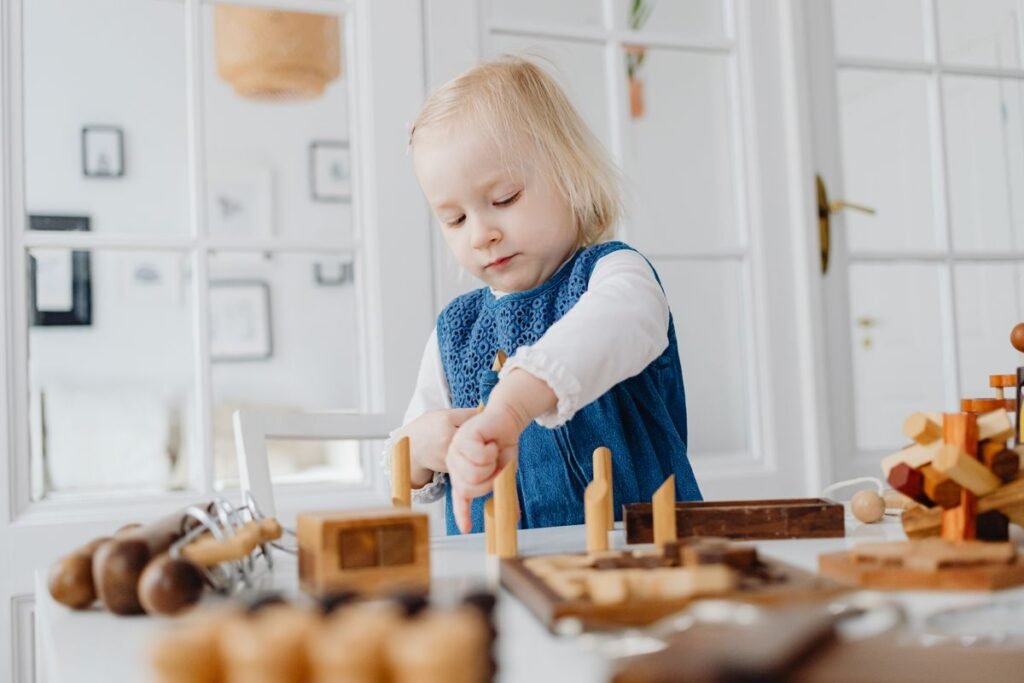
When your toddler is wrestling with a shoe, a puzzle piece, or a tricky step, the instinct is to jump in. Try counting to five first. That short window of productive struggle — frustrating but not overwhelming — is exactly where competence grows. If you solve everything instantly, the lesson they learn is “I can’t do this without you.” If you wait, then coach rather than take over, the lesson becomes “I can figure hard things out.”
Safe enough to fail
Resilience needs small, survivable failures. Let them carry the slightly-too-full cup, climb the low rock, pour their own water and mop the spill. Your job isn’t to prevent every stumble — it’s to make sure the stakes are low enough that a stumble is a lesson, not a disaster. A skinned knee at the park teaches something a padded childhood can’t.
Builds dependence
- Fixing it before they ask
- Redoing their imperfect attempt
- Warning about every small risk
- “Let me do it, it’s faster”
Builds confidence
- Waiting, then coaching
- Letting “good enough” stand
- Allowing safe, small risks
- “You try first, I’m right here”
Warmth is the launchpad, not the opposite
There’s a myth that cuddling and comforting create “crybabies” and over-dependence. The research points the other way: children who know a warm, reliable adult has their back tend to explore more boldly, because they trust there’s a safe place to come back to. So comfort the big feelings and encourage the brave attempts — they’re the same parenting move, not competing ones.
Let boredom breathe
Unstructured, un-narrated play is where curiosity and problem-solving grow. You don’t have to entertain them every minute — a bored kid with a safe space and some objects will invent something.
Words that grow a doer, not a helpless kid
- “You worked really hard on that” (effort, not just outcome).
- “That was tricky and you kept going.”
- “What could you try next?” instead of the answer.
- “You did it yourself — how does that feel?”
Frequently asked questions
Won’t comforting my child too much make them clingy?
Warmth and responsiveness generally build security, and secure kids tend to explore more, not less. Clinginess is usually a phase tied to development, not a result of too much comfort.
How long should I let my toddler struggle before helping?
A few seconds longer than feels comfortable. Aim for productive struggle — frustrating but not melting down. If they hit true overwhelm, step in and coach rather than take over completely.
My kid gives up the moment something is hard. What helps?
Praise effort and strategy rather than results, break tasks into smaller wins, and resist fixing it instantly. Let them experience small, safe successes so “hard” starts to feel doable rather than hopeless.
Keep the plan with
the family timeline.
Log the day, share the timeline, and keep the next handoff clear.
 ParentPod
© 2026 Beyond Volatility. ParentPod™ is a product of Beyond Volatility. ParentPod is not a medical device and does not provide medical advice. Always consult your pediatrician for health decisions.
ParentPod
© 2026 Beyond Volatility. ParentPod™ is a product of Beyond Volatility. ParentPod is not a medical device and does not provide medical advice. Always consult your pediatrician for health decisions.