A Calm Guide to Baby Water Safety: Pools, Lakes, and Kiddie Pools This Summer
Practical baby water safety for a busy summer: constant supervision, a designated water watcher, and clear handoffs at the pool's edge. Calm, not fear-based.
The quick version
- Babies and toddlers can slip under quietly in seconds, so water safety is about constant, eyes-on supervision.
- Name one designated water watcher at a time and hand the role off out loud, every single time.
- Layer your defenses: barriers, supervision, life jackets, and knowing what to do if something goes wrong.
- Backyard kiddie pools and bathtubs deserve the same focus as a big swimming pool.
- This is general guidance, not medical advice. Talk to your pediatrician about your child's specific needs.
Summer should feel easy. Bare feet, sprinklers, a cold drink in your hand while the baby splashes in three inches of water. But baby water safety is one of those things where a little structure up front buys you a whole season of relaxing instead of hovering. The good news: you don't need to be afraid of water. You just need a simple, repeatable system that the whole village can follow.
This guide walks through layered, practical water safety for pools, lakes, and backyard kiddie pools. The heart of it is one idea: at any given moment, one specific adult is watching, and everyone knows who that is.
Why babies need a different kind of watching
Drowning in young children is often quiet and fast. There's usually no splashing or yelling, which is the opposite of what most of us picture. A baby can slip under in the time it takes to grab a towel or answer a text.
Little ones are also top-heavy and curious, so they tip toward water and can struggle to lift their own heads back up. That's why supervision for babies and toddlers means within arm's reach, eyes on the water, phone down. Not nearby. Not glancing over. Actually watching.
Layer your defenses (no single layer is enough)
Safety experts talk about layers of protection for a reason. Any one layer can fail, so you stack several. If one is missed, the others are still standing between your child and the water.
- Barriers: four-sided fencing with a self-closing, self-latching gate around pools; doors and gates locked and alarmed where you can.
- Supervision: a designated adult watching, within arm's reach for non-swimmers.
- Life jackets: a properly fitted, Coast Guard-approved life jacket for open water and boats (not inflatable arm floaties, which are toys).
- Preparation: knowing infant CPR, keeping a phone and a reaching tool poolside, and emptying kiddie pools and buckets right after use.
Floaties are not a safety device
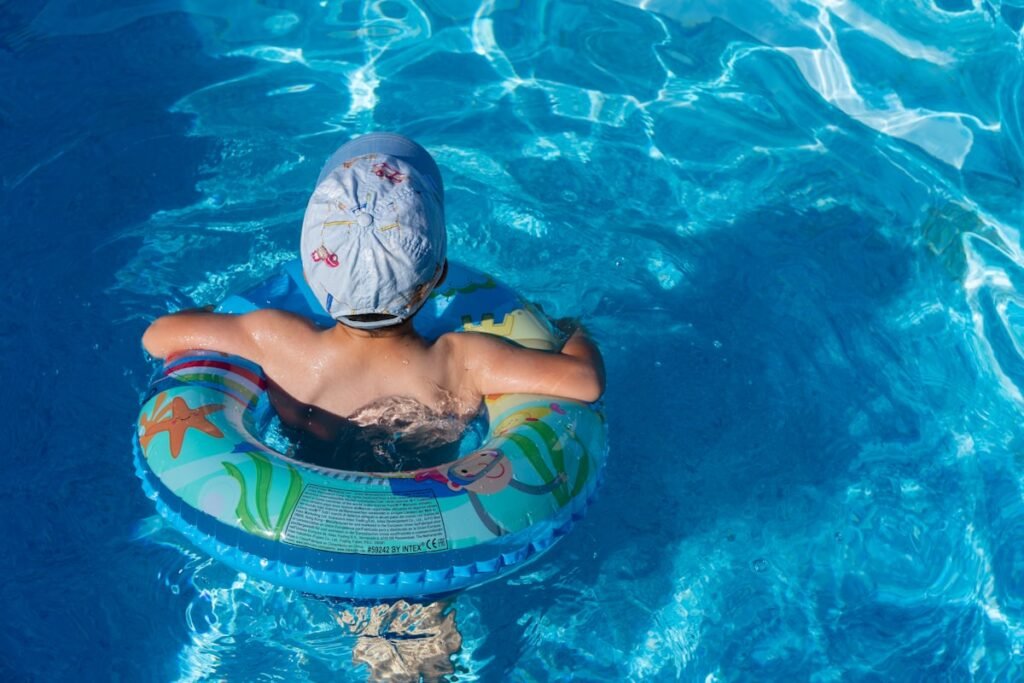
Water wings, foam noodles, and inner tubes are fun, but they can give everyone a false sense of security and slip off in a second. For real flotation in open water, use a fitted, Coast Guard-approved life jacket, and keep watching anyway.
The designated water watcher: your most important rule
On a busy pool day with grandparents, cousins, and three coolers, supervision is easy to lose. Everyone assumes someone else is watching, and "someone" turns out to be no one. The fix is the designated water watcher: at all times, exactly one adult is assigned to watch the water, and that's their only job.
That person doesn't scroll, doesn't fire up the grill, doesn't run inside for sunscreen. When they need a break, they hand the role to another adult out loud and confirm it was received. Some families pass a physical tag or lanyard so it's visible who's "on."
- 1Name the watcher out loudBefore anyone gets in, say who has the water right now. "I've got the water until the next break."
- 2Give them one jobThe watcher stays within arm's reach of non-swimmers, eyes on the water, phone away. No cooking, no side conversations that pull their gaze.
- 3Hand off explicitlyTo switch, the current watcher says "You have the water?" and waits for a clear "Yes, I've got it" before stepping away.
- 4Account for everyone at breaksWhen swimming stops, do a quick head count and physically clear the youngest kids away from the edge.
Make the handoff impossible to skip
The riskiest moment is the gap between watchers, when one assumes the other has it. Treat the pass like handing off a baby: it isn't done until the other person physically takes it and says so.
Pools vs. lakes vs. kiddie pools
Different water, different risks. Here's how to adjust your thinking without overthinking it.
Backyard / public pool
- Four-sided fence, self-latching gate
- Clear water, but edges and drains matter
- Within arm's reach for babies and toddlers
- Empty and store inflatable pools after use
Lake / ocean / open water
- Murky water hides a struggling child
- Fitted, Coast Guard-approved life jacket
- Sudden drop-offs, currents, and cold
- Stay close and in designated swim areas
Kiddie pool / bath / buckets
- Only inches of water are needed to be dangerous
- Never step away, not even for a moment
- Dump it out the second you're done
- Store buckets empty and upside down
A quick pre-swim checklist
Run through this before the baby goes anywhere near water. It takes thirty seconds and resets everyone's focus.
- A designated water watcher is named and knows they're "on."
- Phones are down; the watcher's only job is the water.
- Non-swimmers have a fitted, Coast Guard-approved life jacket for open water.
- Gates and fences are latched; toys are out of the pool when not in use.
- A phone and a reaching tool are within reach poolside.
- At least one adult present knows infant and child CPR.
- Kiddie pools, buckets, and tubs get emptied right after use.
If something goes wrong
Preparation is calm in disguise. You hope to never use it, and you'll be glad you have it. Many parents take an infant and child CPR class before the summer season, and many find a quick refresher worthwhile each year.
If a child has been pulled from the water, even if they seem okay afterward, it's worth a call to your pediatrician or doctor, because trouble breathing can show up later. Trust your gut: you know your child.
When to call your pediatrician or emergency services
- Any time a child was submerged or had to be rescued, even if they seem fine afterward.
- Persistent coughing, fast or labored breathing, or wheezing after time in the water.
- Unusual sleepiness, irritability, confusion, or trouble waking.
- Bluish lips or skin, or any pause in breathing — call emergency services immediately.
- Vomiting or extreme fatigue in the hours following a water scare.
This guidance is general and isn't medical advice. Every child is different, so talk to your pediatrician about your family's specific situation, swimming readiness, and any health concerns.
Keep summer feeling like summer
None of this has to make water stressful. A named watcher, a clear handoff, life jackets in open water, and emptied kiddie pools are small habits that fade into the background once they're routine. Set the system up once, and you get to actually enjoy the splashing, the giggles, and the tiny wrinkled fingers at the end of a long, happy day.
Frequently asked questions
What is a designated water watcher?
It's one specific adult assigned to watch the water with no other job — no phone, no grilling, no side errands. Only one person holds the role at a time, and when they need a break they hand it off out loud and confirm another adult has taken over, so supervision never has a gap.
How close do I need to be to my baby in the water?
For babies, toddlers, and any non-swimmer, supervision means within arm's reach — close enough to touch. Being nearby or watching from a chair isn't enough, because young children can slip under quietly and quickly. Stay in the water with them or right at the edge with hands ready.
Are floaties and water wings safe for infants?
Inflatable arm floaties, foam noodles, and inner tubes are toys, not safety devices. They can slip off or deflate and often create a false sense of security. For real flotation in open water or on a boat, use a properly fitted, Coast Guard-approved life jacket — and keep actively watching regardless.
Is a backyard kiddie pool really dangerous?
Yes. Babies and toddlers can drown in only a couple of inches of water, so kiddie pools, buckets, and bathtubs deserve the same focus as a full-size pool. Never step away while it's in use, and empty and store it immediately afterward so no child can wander back to it.
Should I call the pediatrician after a water scare even if my child seems fine?
If your child was submerged or had to be rescued, it's worth a call to your pediatrician, because breathing problems can sometimes appear later. Watch for persistent coughing, labored breathing, unusual sleepiness, or bluish skin, and seek emergency care right away if breathing looks abnormal. This isn't medical advice — when in doubt, get your child checked.
Keep the plan with
the family timeline.
Log the day, share the timeline, and keep the next handoff clear.
 ParentPod
© 2026 Beyond Volatility. ParentPod™ is a product of Beyond Volatility. ParentPod is not a medical device and does not provide medical advice. Always consult your pediatrician for health decisions.
ParentPod
© 2026 Beyond Volatility. ParentPod™ is a product of Beyond Volatility. ParentPod is not a medical device and does not provide medical advice. Always consult your pediatrician for health decisions.