How to Play With a 3–6 Month Old (When They Can’t Do Much Yet)
They can’t sit, crawl, or grab much — but this is a golden window for connection and learning. Simple ways to play with a young baby.
The quick version
- At 3–6 months the best “toy” is your face and voice — connection is the whole curriculum.
- Tummy time, reaching, and rolling practice are play and development at once.
- You don’t need fancy toys — high contrast, simple objects, and narration do the work.
- Short, frequent play beats long sessions; watch for the “I’m done” cues.
Your baby can’t sit up, can’t crawl, and mostly gums their own fist — so what on earth do you “play”? Plenty, as it turns out. The 3–6 month window is a rich stretch of development hiding inside very simple moments. You don’t need a playroom of gadgets; you need your face, your voice, and a few minutes at a time.
You are the best toy in the room
At this age babies are wired to study human faces above anything else. Make expressions, stick out your tongue, widen your eyes, and pause to let them respond. Chat through your day in a sing-song voice, then wait — those little coos and gurgles are your baby taking their turn in a conversation. This back-and-forth is literally how early language and connection are built.
Tummy time, disguised as fun
Tummy time builds the neck, back, and core strength every later milestone depends on — and many babies hate it at first. Make it playful: get down on the floor face-to-face, put a mirror or a high-contrast card in front of them, or drape over your chest while you talk. Short and frequent (a few minutes, several times a day) beats one long, tearful session.
Reaching, batting, and the first grabs
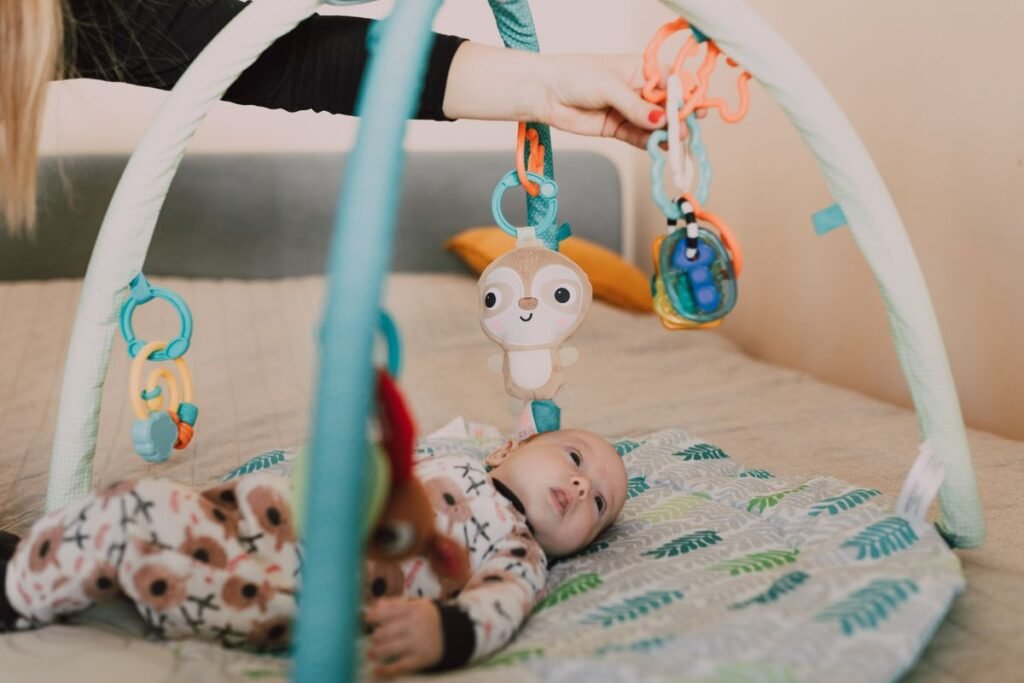
- Dangle a light rattle or ring just within reach and let them swipe at it.
- Offer easy-to-hold objects — a soft ring, a wooden spoon, a crinkly cloth.
- Narrate textures: “this one’s bumpy, this one’s soft.”
- Give them time on their back to discover their own hands and feet.
Skip the fancy stuff
High-contrast black-and-white cards, a safe mirror, a scarf, and your own face out-perform most expensive baby toys at this age. Simple and responsive wins.
Read the “I’m done” cues
Young babies get overstimulated quickly. When your baby turns their head away, arches back, gets fussy, or glazes over, that’s not rejection — it’s a full cup. Give them a quiet break and come back later. Following those cues teaches your baby that you’re paying attention, which is its own kind of learning.
Frequently asked questions
How long should tummy time be at 4 months?
Aim for short, frequent sessions adding up to a fair bit across the day, guided by your baby’s tolerance. Making it playful — face-to-face, a mirror, over your chest — helps far more than pushing through tears.
Do I need special toys for a 3–6 month old?
No. Your face and voice, high-contrast cards, a safe mirror, and simple grab-able objects do the most. Responsiveness matters more than any product.
My baby fusses during play. Am I overstimulating them?
Possibly — young babies tire fast. Head-turning, arching, or glazing over are “I’m done” cues. Offer a calm break and try again later; following those signals is good for their development.
Keep the plan with
the family timeline.
Log the day, share the timeline, and keep the next handoff clear.
 ParentPod
© 2026 Beyond Volatility. ParentPod™ is a product of Beyond Volatility. ParentPod is not a medical device and does not provide medical advice. Always consult your pediatrician for health decisions.