Screen Time Under 2: What the AAP Actually Says (and What It Doesn’t)
The AAP screen time rule for kids under 2 is more nuanced than "zero screens." Here's what the guideline actually says, the video-chat exception, and how to skip the guilt.
The quick version
- The AAP doesn't say "zero screens forever" — it discourages solo screen media before 18-24 months, with one clear exception.
- Video chat with grandma or a deployed parent is explicitly fine at any age.
- Quality and context matter as much as the minute count — co-watching beats a tablet handed over alone.
- One show while you shower does not undo your parenting. Guilt is optional.
- After 18-24 months, small amounts of high-quality content you watch together are reasonable.
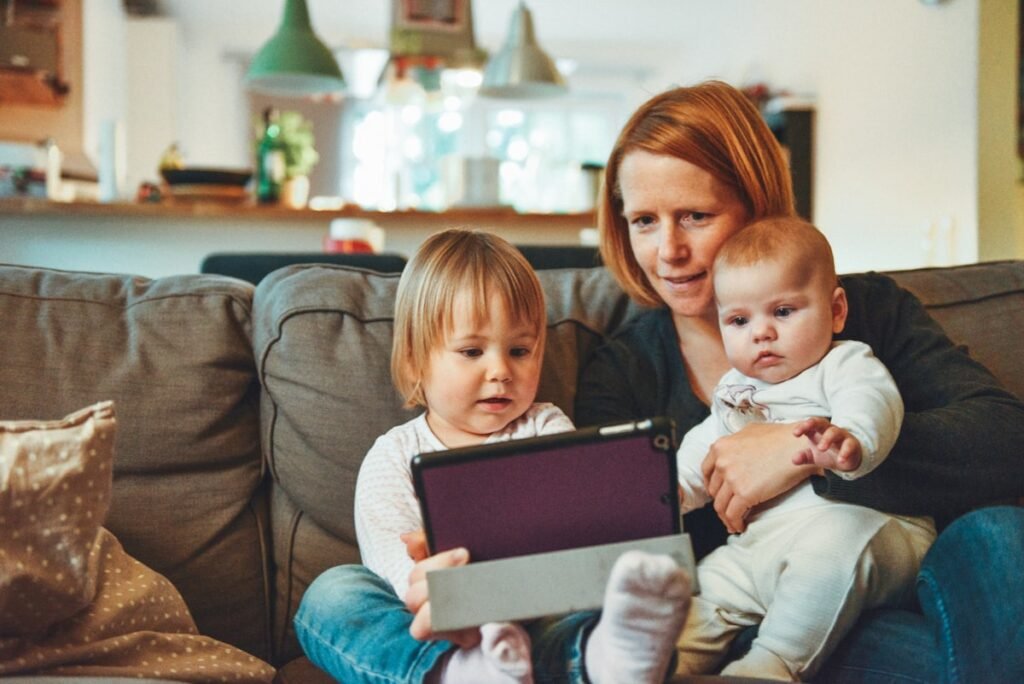
You handed your 14-month-old your phone for four minutes so you could pee in peace, and now a little voice in your head is reciting the rule: "No screen time under 2." Take a breath. The actual American Academy of Pediatrics (AAP) guidance on screen time under 2 is more nuanced — and a lot more forgiving — than the version that gets shouted in the comments section.
This is the myth-busting version. We'll walk through what the AAP guideline really says, the exception almost nobody mentions, why how you use screens matters more than a stopwatch, and how to put the guilt down. None of this is medical advice — your pediatrician knows your kid — but it should make the rule a lot less scary.
What the guideline really says
The AAP recommends avoiding screen media other than video chatting for children younger than 18 to 24 months. After that, from roughly 18 months to age 2, they suggest introducing only high-quality programming, and watching it with your child rather than handing it over solo.
Notice what that is not. It is not "any pixel before age 2 causes harm." It's not a ban on FaceTiming the grandparents. And it explicitly leaves room for a gradual, supervised introduction in the second half of the second year. The headline shrinks a careful, age-tiered recommendation into a slogan.
What people think it says
- Zero screens until the 2nd birthday, no exceptions
- Any screen exposure damages the brain
- Video calls count against the limit
- One slip-up means you blew it
What it actually says
- Avoid solo screen media before ~18-24 months
- Video chatting is specifically excluded
- After 18-24 mo, small amounts of quality co-viewing are fine
- It's a gradual, supervised on-ramp — not a cliff
The two things that actually matter: context and quantity
Researchers keep landing on the same idea: for the youngest kids, what they're watching and who they're watching with matters at least as much as the number of minutes. A baby parked alone with autoplay is a different experience than the same baby on your lap while you name the animals out loud.
- Context (the how): Co-watching, talking about what's on screen, and connecting it to real life turns passive screen time into shared interaction. Background TV that nobody's watching still pulls attention away from play and talk.
- Quantity (the how much): Small, intentional amounts beat long, accidental stretches. The danger zone is when screens quietly replace sleep, movement, hands-on play, and back-and-forth conversation — the stuff brains are actually built by.
The co-viewing upgrade
You don't have to narrate like a documentary. Just sit close, point, and react: "Whoa, a big red truck!" That turns a screen from a babysitter into a back-and-forth, which is where the real learning lives for little ones.
The video-chat exception nobody mentions
Here's the part that gets lost: video chatting is carved out of the recommendation on purpose. The AAP treats a live call differently from a TV show or app because it's two-way and social — your baby is responding to a real person who responds back.
- FaceTime or video calls with a long-distance grandparent: fine.
- A deployed or traveling parent reading a bedtime story over video: fine, and genuinely good for connection.
- A relative singing the same silly song every Sunday until your baby grins: exactly the kind of "screen" the guideline is okay with.
So if a chunk of your baby's screen exposure is a real human face talking back, you can stop counting that against some imaginary limit. That's relationship time, not screen time in the way the rule means it.
Quality vs. quantity, at a glance
If you only remember one mental model, make it this one: a little bit of good, watched together, beats a lot of whatever, watched alone. Picture it as a simple grid.
A realistic, low-guilt game plan
- 1Protect the non-screen basics firstSleep, meals, floor play, outside time, and talking with you are the foundation. If those are happening, a short show isn't stealing from them.
- 2Use video chat freelyReal-time calls with people who love your baby don't count against the spirit of the guideline. Lean in.
- 3When you do use a screen, sit inCo-watch when you can. Even narrating from across the room ("that's a duck!") beats silent solo viewing.
- 4Pick a few high-quality, slow-paced showsCalm pacing, simple stories, real-world topics. Skip frantic, ad-heavy, autoplay-driven content for the littlest kids.
- 5Make screens the exception, not the default sootherIt's fine as a tool for the shower, the work call, the meltdown at the DMV. The goal is occasional, not the only off-switch you have.
Let's talk about the guilt
Most parents reading a screen-time article aren't the ones who need it. The fact that you're thinking about this at all means you care. So let's name the thing: the guilt is usually bigger than the actual risk.
A few minutes of Bluey so you can make dinner is not a developmental emergency. The research worry is about screens crowding out everything else, day after day — not about one cartoon on a rough Tuesday. Parenting is a long average, not a single afternoon.
Reframe the rough days
On the day you survive on more screen time than you'd planned, you didn't fail. You used the tool you had so everyone made it to bedtime. Tomorrow is a fresh start, and your baby will not remember the iPad — they'll remember a parent who kept showing up.
Real life includes sick days, sick parents, newborn-plus-toddler chaos, and solo-parenting stretches where a screen is the only way to get a hot meal in you. Those days are part of the average too, and the average is what matters.
When to check in with your pediatrician
- Screens seem to be displacing sleep, and your child is consistently overtired or hard to settle.
- Your toddler shows little interest in people, play, or back-and-forth interaction compared to screens.
- You have concerns about speech, language, or social development at a checkup age.
- Mealtimes or daily routines feel impossible without a device, and it's stressing the whole family.
- You just want a gut-check on what's normal — that's a completely valid reason to ask.
None of these are emergencies, and none mean you've done something wrong. A quick conversation at a well visit is the right move whenever something feels off. Your pediatrician would much rather you ask than worry alone.
The bottom line
The AAP guidance for under-2s isn't a purity test. It's a nudge: protect the real-world stuff that builds little brains, lean on video chat freely, co-watch when screens do come out, keep amounts small, and give yourself grace on the hard days. That's a rule you can actually live with.
Frequently asked questions
Does the AAP really say zero screens before age 2?
Not exactly. It recommends avoiding screen media other than video chatting before about 18 months, then allows small amounts of high-quality programming watched together from roughly 18-24 months. It's an age-tiered on-ramp, not a hard ban with no exceptions.
Does video chatting with grandparents count as screen time?
The AAP specifically excludes video chatting from its screen-time limits because it's live, two-way, and social. Calls with family are about connection, so you can stop counting them against any limit.
Is it okay to use a screen so I can shower or cook?
For most families, occasional short screen use to handle real life is reasonable, especially after 18-24 months and when you choose calm, high-quality content. The concern in the research is about screens regularly crowding out sleep, play, and conversation — not the rare shower break. As always, your pediatrician can weigh in on your child.
What makes content 'high quality' for a toddler?
Generally: slow pacing, simple stories, real-world topics, no ads or autoplay pulling them to the next thing, and content you can talk about together. Frantic, hyper-stimulating shows are harder for little ones to process, so calmer is usually better.
I've used way more screen time than I meant to. Did I mess up my kid?
Almost certainly not. Development is shaped by the long-run average, not one heavy week. If you're worried, dial back gradually, add in co-viewing and real-world play, and mention it at your next checkup — but a stressful stretch of extra screens is not damage.
Keep the plan with
the family timeline.
Log the day, share the timeline, and keep the next handoff clear.
 ParentPod
© 2026 Beyond Volatility. ParentPod™ is a product of Beyond Volatility. ParentPod is not a medical device and does not provide medical advice. Always consult your pediatrician for health decisions.
ParentPod
© 2026 Beyond Volatility. ParentPod™ is a product of Beyond Volatility. ParentPod is not a medical device and does not provide medical advice. Always consult your pediatrician for health decisions.